
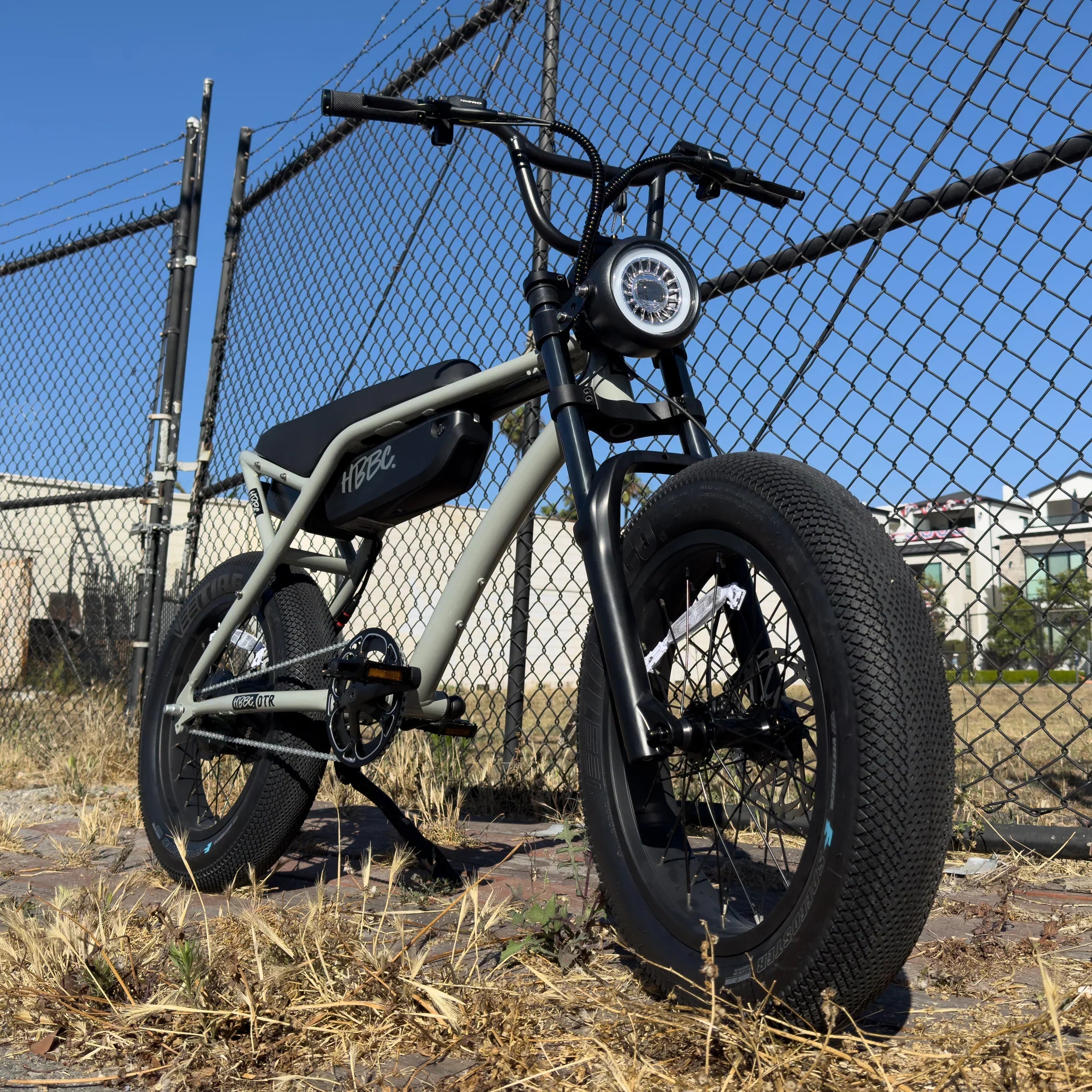
If you've been drawn to the moto-inspired scrambler e-bike style — fat tires, low-slung frame, aggressive stance — you're not alone. Scrambler e-bikes have exploded in popularity along the Southern California coast, and for good reason. They look incredible, ride smoothly on a variety of surfaces, and turn heads everywhere they go.
But not all scrambler e-bikes are built the same. Before you spend $1,500–$3,000+, here's what actually matters.
Frame Geometry
The scrambler look starts with the frame. Look for a stretched, low step-over design that mimics classic motorcycle proportions. Aluminum frames are the standard — lightweight, rust-resistant, and durable enough for daily coastal riding. Avoid frames with excessive welds or inconsistent finishing, which are signs of lower manufacturing quality.
The HBBC DTR was designed from the ground up in Huntington Beach with coastal riding in mind — the geometry is aggressive enough to turn heads but comfortable enough for daily use.
Motor and Class
Most scrambler e-bikes are Class 2 (throttle-assisted, 20mph max) or Class 3 (pedal-assist, 28mph max). In California, Class 3 e-bikes are not permitted on bike paths — only bike lanes and roads. If you plan to ride the Huntington Beach bike path, a Class 2 bike keeps you legal and hassle-free. Know which class you're buying before you commit.
Battery Range
Real-world range is always less than advertised. A bike claiming 40-mile range will typically deliver 25–30 miles under normal conditions — more if you're lighter and riding flat terrain, less if you're heavier or riding full throttle. Look for at least a 48V battery for adequate power, and check whether the battery is removable for easy charging.
Fat Tires
The 20" fat tire is the signature of the scrambler style. Beyond aesthetics, fat tires (4" width) provide better traction on sand, gravel, and uneven pavement — all common on coastal paths. Make sure replacement tires are readily available from the manufacturer before you buy.
Components and Build Quality
This is where budget bikes reveal themselves. Check the brakes — hydraulic disc brakes are significantly better than mechanical disc brakes for stopping power. Look at the saddle, grips, and display unit. A quality display should show speed, battery level, pedal assist level, and odometer at minimum.
At HBBC we spec the DTR with top-shelf components throughout — because we've been designing bikes in Huntington Beach since 2005 and we know what holds up on the coast.
What to Budget
Entry-level scrambler e-bikes start around $1,200 but often cut corners on motor quality and battery capacity. The sweet spot for a well-built scrambler e-bike is $1,800–$2,500. Above $3,000 you're paying for brand premium as much as performance.
Test Ride Before You Buy
There's no substitute for actually riding a bike before committing. Visit our flagship store at 328 Main Street, Huntington Beach — we'll put you on the DTR and let it speak for itself.
Bottom Line
The scrambler e-bike market is crowded. Focus on frame quality, motor class, battery specs, and build quality over brand hype. The HBBC DTR checks every box — designed and sold by the same team that's been designing bikes on Main Street in Huntington Beach since 2005.
Best Beach Cruisers of 2026